Showing posts with label fantasy. Show all posts

Sunday, April 27, 2014

I judged a book by its cover and all I got was this lousy blog entry

FREE BOOK ALERT

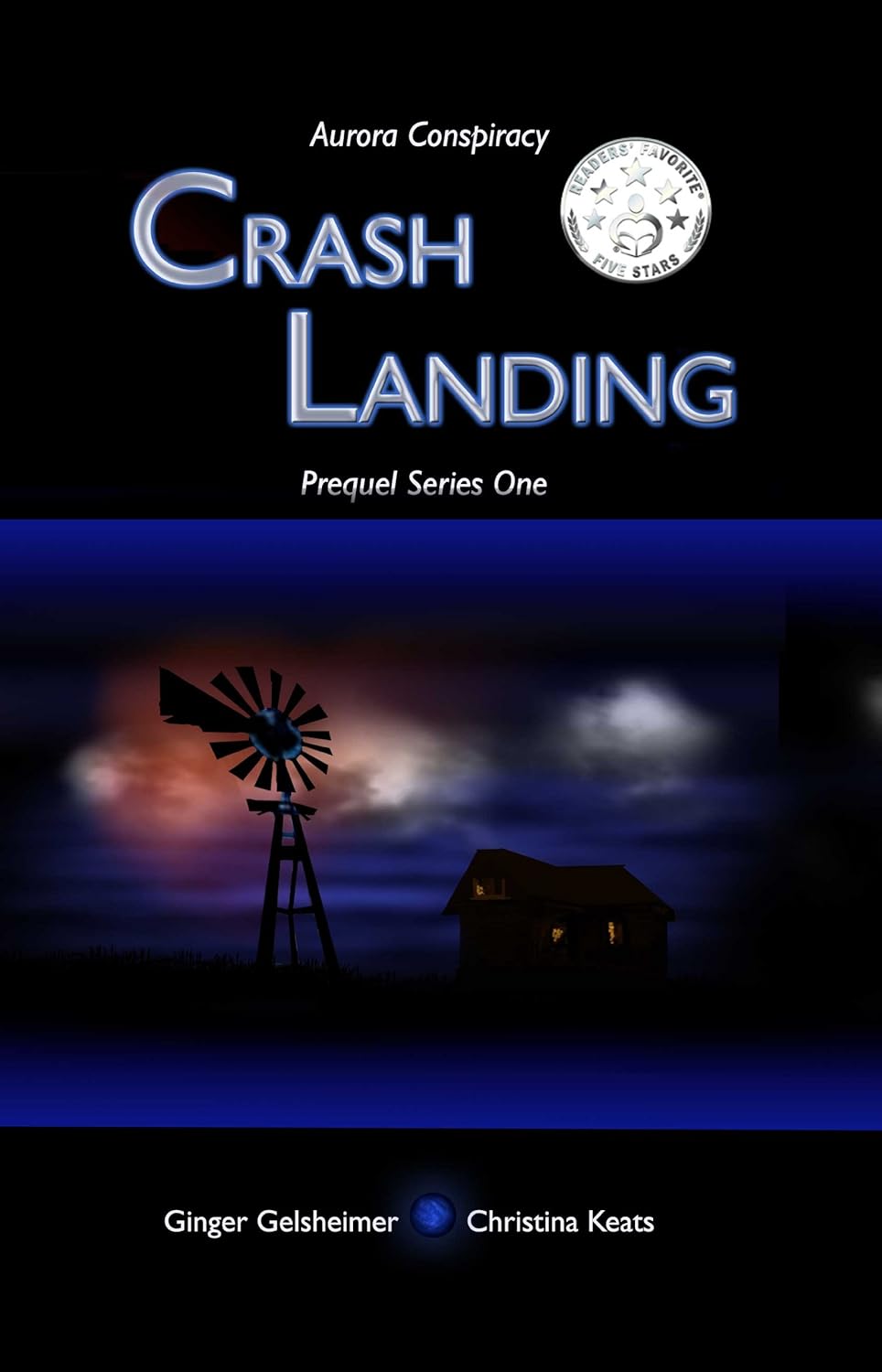
I'm in some YA book groups on Google+. While making clever (to me) comments on others' posts, I came across Ginger Gelsheimer's promo for The Aurora Conspiracy, a digital book series "inspired by Raiders of the Lost Ark, Ancient Aliens, and Doctor Who." And I thought, I have to try this, for it combines two of my favorite pieces of media and a series some nerds I know like to talk about.  

Best part: It's free! Worst part: It's part one of about 584. But, I'm not here to discuss Ms. Gelsheimer's shrewd marketing strategy; you can find that one my blog, JB Yells About Supply, Demand, War Profiteering, And 'No Soliciting' Signs. ON TO THE REVIEW, I SAY.  

Look for the next prequel series: Aurora Conspiracy: NCIS; SVU: CSI: WTF


BUYER BEWARE


I am flummoxed. First chapter: warp speed ships, energy crystals, Atlantis, tribrids (awesome) aliens from some place called Erebus (DARKNESS!) who are headed to Earth. As if that doesn’t completely blow your circuits, in the second chapter, there’s a principled 19th century Texas judge. At that point, I almost gave up, but the Texas judge had someone executed, which restored order to this story.

I’m tempted to go into a nuanced explication of the names of people and places that are reminiscent of something else, but that would be disingenuous to Ginger (I’ve decided we’re now on a first name basis, and are meeting for scones, coffee, and giggle-filled chitchat on Saturday morning - she's buying), as one could do this with almost any piece of literature and use it as a crutch for proving some sort of cynical point (see: all my other blog posts).

In place of such nonsense, there will only be multiple complaints about how the first chapter completely goes off the deep end and thrusts (tee hee) us in the middle of some complicated spaceship maneuver, then dumps us in olden Texas for A LOVE STORY. 

NOOOOOOOOOOOOOOOOOOOOOOOOOOOOOOOOOOOOOO

The judge's daughter, Emily, helps to recover the alien Aurelius from his downed ship, and to hide him from curious visitors to her family's ranch. Naturally, Aurelius, who is from a different plane of existence, speaks perfect English. Now, I watch Star Trek, and ALL the aliens speak perfect English, but at least they explained it away with the universal translator business. An invention, by the way, that would be a boon to the mail-order bride industry. Just a thought. Anyway, he has superhuman powers and seems to calm even the most ornery animals and people with his touch. Naturally, he falls in love with Emily, and in true YA paranormal sci-fi whatever romance, they "have relations," which is par for the course, but this time it's a glowing alien and a teenage girl. I'm mildly curious as to how this was accomplished IN A PROFESSIONAL WAY YOU WEIRDO, but Ginger won't tell us in the story. So, Ginger, if you're reading this, email me with the subject line "NSFW ;)" so I know what to expect. 

Question: Where is the judge for all of this? He sort of whimsically shrugs and sighs. "That's my Emily, always getting romantically involved with aliens despite our objections. But hey, she's family. Let's eat!" Sure, Emily is spunky and independent, as most of our YA heroines tend to be, and off she goes with Aurelius. Dad, though, is a dope. He could have at least been imbued with some of the fire of Indiana Jones, or the weird hair of George Tsoukalas, or lived in a phone booth. In fact, I'm still not sure how those three inspirations yet tie into these books, so in order to find out, I mu$t continue the $erie$. 

The whole time Aurelius is recovering, or these two are flirting in the barn or riding horses, I'm thinking, WHERE ARE THE SPACESHIPS AND THE TRIBRIDS? I don't care about the rube of a sheriff or the federal marshals who know the judge is hiding something. THEY ARE NOTHING WHEN FACED WITH THE AWESOME POWER OF CHAPTER ONE. 

Anyway, there's a decent cliffhanger at the end, which sets the stage for part two. So, it's the old bait and switch, and I fell for it hard. And that's how I read my first sci-fi paranormal whatever love story. And I might read the next one. Please, stop me.


NEXT TIME, I YELL ABOUT

A YA novel that oversimplifies a decades-old conflict through the eyes of a little girl. Let's just say IT RUNS IN THE FAMILY!

BORING STUFF

Ginger Gelsheimer & Christina Keats
2013 WheelMan Press

Sunday, March 23, 2014

AS YOU WISH

INCONCEIVABLE


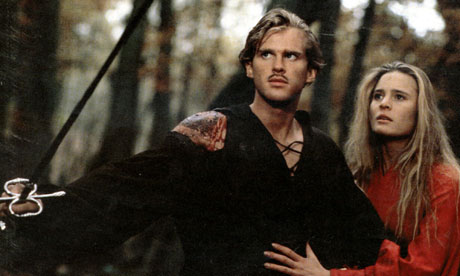
Are you kidding me? Why haven't I read this until now? This should be a staple book for 7th-9th grade. When I finally become king of America, I'll require it in every classroom. Sword fights! Pirates! Thieves! Monsters! Adventure! Action! And, I suppose, love. 

It's the third installment of 1970's month. Although it was published in that decade, it's a timeless classic, and a shoe-in for inclusion in the vaunted SHELF OF FAME

And these guys! Inconceivable! You killed my father, prepare to die! Anybody want a peanut?

This is an all-timer, and not just because of the movie, which continues to captivate; but it is part of the equation of success. If I ever trick someone into having a kid with me, this will be the first movie s/he views, and probably the only one until s/he is old enough to appreciate Godard and Eisenstein and pretend s/he is smarter and deeper than me. 

Where to begin praising this book? Probably the beginning. William Goldman is a clever fellow, and his vitae is long and storied, but this The Princess Bride (TPB) is his best, by far. Part of what makes this book so great is that Goldman himself wrote the screenplay for the movie, with most of the scenes inserted verbatim, which makes imagining these scenes unfolding all the better as I read; the faces and voices were there. Some might say that seeing the movie first, then reading the book is going to taint the experience of the book, but I argue that in this case, it's enhanced. For one, THE SAME GUY wrote both. Second, it's his vision of the book in film form. Third, by virtue of 1 and 2, the story is not butchered for popular consumption, nor are key details changed that enrage the people who like to bemoan how movies ruin books, like this lady.

If you clicked the link, you'll notice that the author leads off with The Scarlet Letter. As I started TPB, the first comparison that came to mind was The Custom House, the horribly dull introduction to Hawthorne's work. It's what, 43 pages? All he had to write was, "Hey, I found this story of Puritan scandal in a trunk in a stuffy old attic. It's pretty good. Let's read it together." UUUUGGGHHHH I remember having to read that turgid glacier of an introduction in high school. What a drag. Conversely, Goldman sets up the story of TPB with actual fanfare and meaningful context. This exposition of how the story came about is long and slow-paced, but is much more engaging than The Custom House. However, there is some material about staring at some actress in a swimsuit that made me uncomfortable. (Here, the italics indicate that I am one whose comfort zone is expansive, and that usually it takes something extreme to, as they say, get my goat.) Probably because I want kids to read this book. Now I'll get angry emails and calls from parents who think I am promoting perversion. Goldman saves the introduction with the discussion of his father reading the (fictional) S. Morgenstern classic book to him as a child, and Goldman's lifelong desire to publish an abridged version. There's some satire here that will fly over a kid's head, but I got it. Yay me. This part of the introduction, and the periodic interjections by Goldman throughout the story, are transferred to the film in the grand-dad / grandson moments with Peter Falk and Fred Savage. 

After the introduction, the story begins in earnest. For the sake of pacing in the movie, the personal histories of the main characters are jettisoned, and in the book they provide much-needed new information that gives us a deeper understanding of Prince Humperdinck, Inigo, Fezzik, and Buttercup. And my goodness, how fascinating these histories are! I'm thankful for them, as they provide excellent fodder for discussions of character motivations and developing rounded, full personalities within a book. 

Then, there is the narrative. It's like watching the movie again, with some slight, but not debilitating, differences. It moves right along, as Goldman promises, and his interjections and certain parts of the abridgments are entertaining. I worried that he would get too cute with them and bring the story to a screeching halt over and over, but it's tastefully done, and he wisely chooses the right spots. 

I WOULD NOT SAY SUCH THINGS IF I WERE YOU

I wanted my room to look like this when I was a kid.
And I wanted Peter Falk to read bedtime stories to me.
I never got what I wanted. 
So many themes emerge as one reads. Allow me to cover them in convenient list form:

  1. Father-son relationship
  2. The importance of stories in our culture/childhoods
  3. Standard tropes of fairy tales
  4. The role of true love in stories
  5. Loneliness and friendship
  6. Solidarity and betrayal
  7. Finding one's place in society
  8. Passing the torch (in lots of ways)
  9. Nagging wives (introduction only) 
  10. Death and Life
  11. Life isn't fair
  12. The eternal presence of pain
There are more one could tease out and analyze, I'm sure, but I don't work for Spark Notes, so forget about it. With the wealth of themes, motifs, and symbols within this story, one could run the 8/9 gamut of literature standards in this one book. If I could go back in time and hypnotize my English teacher into scuttling The Scarlet Letter and replacing it with TPB, I would. I'd also kick myself for using time travel so frivolously. I want to use this in a literature class to deconstruct fairy tales and fantasy books, so that the kiddos and I can examine and make fun of them, and by doing so, understand them. It's like bullying, but with a purpose.  

There is not much more I can add to the extant literature about this book and film combination. That many people appreciate it and hand it down through their generations demonstrates that some of us still have taste and decency, but also that we're proving Goldman's point of the importance of stories that are shared across families and generations as a way to connect, to bond, and to establish common mythology, but also common values. 

What's most impressive to me about Goldman is the ease and brevity with which he creates a fictional world. They're the Cliffs of Insanity because...they're the cliffs of insanity! We can fill in the rest. The rodents of unusual size? Sure, they're real. When reading fantasy, we do suspend disbelief, and Goldman plays with that, but everything seems so logical, especially in the way that he categorizes and ranks things throughout the book - most people will probably remember the most powerful kisses narration by Peter Falk near the end of the film. Goldman throws in similar silliness with timing the invention of certain things and ideas, which, in the world of The Princess Bride, makes sense, but in our boring old world, would be highly illogical, Captain. 

It's the perfect mix of comedy, wit, drama, intrigue, and adventure within a timeless setting, without resorting to the scope and length of the 1000-page epics. I suppose that's why he's a celebrated author for a living and I post this drivel for free. 

Mawidge.

The frenzied ending might be my favorite part of the book. Here, Goldman gives us exact times for every single encounter and action and the story hurtles toward its inevitable conclusion. I remember thinking at one point, there are only 25 pages left in this book; how will Goldman pull this off? I'm irritated, but extremely curious. Now, the very end, in which Goldman gives his final commentary, leaves a cliffhanger, but is mirrored well in the movie, leaving us to question what happens after the story ends. Obviously, that is up to the reader, which is the power of literature and imagination. Do we want a happy ending? Should there be extended conflict? Will *shudder* there be a sequel? So, there's some satire around happy endings, which is fine. How would you expect something like this to end other than how it started - with a laugh. 

Okay, I'll stop fawning now.

NEXT TIME, I YELL ABOUT

The fourth, and probably last, book in 1970's month. Let's just say that I hear this one A LOT!


BORING STUFF

William Goldman
1973 Del Rey